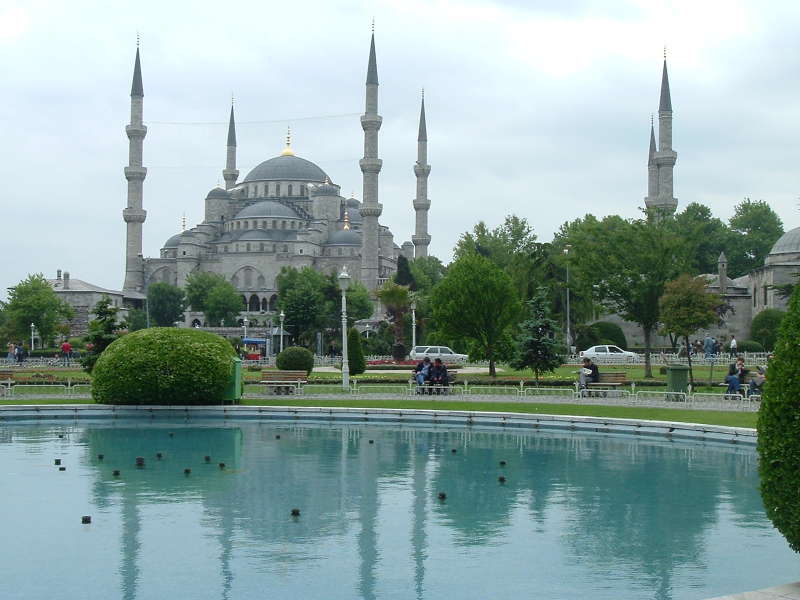
Turkish Verbs
Verbs
All verb infoon one page Original LATEX
If you ignore verbs, so far we have seen about all there is to learning Turkish word morphology. However, there are many verb forms to learn. At least they're fairly well ordered. We need to start by looking at how verbs can be formed from other words. Then we will see how verbs can be modified — made negative, passive, and causative. Then there are the moods and the tenses, where a lot of the complexity happens.
Amazon 0812020340
Amazon 0198700369
Infinitive
-
This uses -mek, and is the form found
in the dictionary:
anlamak = to understand
görmek = to see
gitmek = to go
okumak = to read
Verb Formation
Verbs can be formed from "substantives" or other non-verb words. A few, not many, are formed simply by adding the infinitive -mek to an adjective or noun.
- boya = "paint", while boyamak = "to paint".
- eski = "old", while eskimek = "to wear out".
- gerek = "necessary", while gerekmek = "to be necessary".
There aren't many examples of this type of verb formation. Many more verbs are formed by starting with a substantive word and then adding a suffix and the infinitive -mek. See G.L. Lewis' Turkish Grammar, chapter 14, sections 20-29.
-
-e-
- oyun = "game", while oynamak = "to play".
- yaş = "age", while yaşamak = "to live".
-
-le-
- su = "water", while sulamak = "to irrigate".
- kilit = "lock", while kilitlemek = "to lock".
- kir = "dirt", while kirlemek = "to make dirty".
- temiz = "clean", while temizlemek = "to make clean".
Notice that -le- is used for the category of words describing the sounds animals make:- hav hav = the sound a dog makes, while havlamak = "to 'woof woof' like a dog"
- miyav = the sound a cat makes, while miyavlamak = "to 'meow' like a cat"
-
-len-
The reflexive and passive of -le-, also some verbs synonymous with the -le- form, and some verbs for which there is no -le- form.- kir = "dirt", kirlemek = "to make dirty", kirlenmek = "to be made dirty".
- temiz = "clean", temizlemek = "to make clean", temizlenmek = "to be made clean".
- serin = "cool", serinlemek = "to become cool", serinlenmek = "to become cool".
- can = "life", canlanmak = "to come to life", canlandırmak = "to bring to life",
- kirlemek = "to make dirty", kirletmek = "to make dirty"
- temiz = "clean", temizlemek = "to make clean", temizletmek = "to be made clean".
-
-leş-
Reciprocal of -le- or to form "to become ..."- karşılamak = "to meet", karşılaşmak = "to meet one another"
- mektup = "letter", mektuplaşmak = "to correspond"
- bir = "one", birleşmek = "to become united"
-
-el- / -l-
Added usually to adjectives, infrequently to nouns, to form "to become ..."- az = "little", while azalmak = "to diminish"
- çok = "much", while çoğalmak = "to increase"
-
-er-
Used with color adjectives to form "to become ...", with other words to form an active verb. Note, as described in some detail in Lewis' book, that two-syllable color words actually have their final syllable replaced by -er-.- az = "white", ağarmak = "to become white"
- gök = "blue" or "green", göğer or göver = "to become blue green"
- kızıl = "red", kızarmak = "to become red" or "to be roasted"
- yaş = "moisture", yaşarmak = "to become moist"
-
-se-
The only surviving example of the once common "to want" is susamak for "to thirst". Otherwise, a few verbs use this to form "to regard as ..."- benim = "mine" (or "of me"), benimsemek = "to regard as one's own"
- mühim = "important", mühimsemek = "to regard as important"
-
-imse
Used similarly to -se- to form "to regard as ..." or "to consider to be ..."- az = "little", azımsamak = "to consider inadequate"
- çok = "much", çoğumsamak = "to consider excessive"
-
-de-
Used in onomatopoeic words which end in r or l and which can be repeated to form an adverb. For example, cızır is "sizzling", the sound made by frying food; cızır cızır is then "sizzlingly", and cızırdamak is "to make a sizzling sound", and just cızırtı is the noun "sizzling". There are similar sets of words for "creaking", "growling", "snoring", "crunching", "pattering" (as in footsteps), "glittering" (seldom a noisy activity), and "tapping" (as in ravens at doors).
Verb Modification
There are several ways of modifying verbs to produce related words. Some of these begin to show how complex verbs, expressed as phrases in English, are made by combining suffixes. Presumably a large dictionary would cover these other forms, but you often have to (de)construct your own...
Amazon 0486250644
Amazon 0198700369
-
Negative — -me- or infrequently -mez-
-
For most tenses, add -me-
görmek = "to see"
görmemek = "not to see" -
For the general (or aorist) tense only,
add -mez- in place of the characteristic
aorist -(i)r- suffix,
except for the 1st person, where it is just -me-.
-
Ahmet yazar =
Ahmet is a writer.
Ahmet yazmaz = Ahmet is not a writer. -
Barişnikov dans eder.
Siz, Senatör Kuğayl,
siz dans etmez.
Baryshnikov is a dancer. But you, Senator Quayle, you are not a dancer.
-
Ahmet yazar =
Ahmet is a writer.
-
For most tenses, add -me-
-
Passive — -n- or -il- or -in-
-
For verb stems ending in vowels, add -n-
okumak = "to read",
okunmak = "to be read" -
For verb stems ending in consonants other than l, add -il-
vermek = "to give",
verilmek = "to be given" -
For verb stems ending in l, add -in-
bilmek = "to know",
bilinmek = "to be known"
-
For verb stems ending in vowels, add -n-
-
Causative — -dir- or -t- or -it-
-
Most verbs add -dir-
bilmek = "to know",
bildirmek = "to inform" or "to announce" -
Verbs ending in a vowel, or l, or r,
add only -t-
anlamak = "to understand",
anlatmak = "to explain" -
Verbs ending in ş or ç add -ir-
içmek = "to drink",
içirmek = "to cause or make to drink" - A few monosyllable verb stems ending in k add -it-.
-
Doubly causative verbs are possible:
pişmek = "to cook" (intransitive, the meat cooks)
pişirmek = "to cook" (transitive, the chef cooks the meat)
pişirtmek = "to have something cooked"
ölmek = "to die"
öldürmek = "to kill"
öldürtmek = "to have someone killed"
Higher-order causation is grammatically possible, but stilted:
öldürttürmek = "to get someone to have someone killed", or to get someone else to hire a hitman.
öldürttürtmek = the same thing but one more step removed, "to get someone to get someone to have someone killed", or to get someone else to contact an agency to have them hire the hitman.
-
Most verbs add -dir-
-
Reflexive — -in-
- giymek = "to wear clothes"
- giyinmek = "to dress oneself"
- giyindirmek = "to dress someone else"
- giyindirilmek = "to be dressed by someone else"
- giyindirildirmek = "to be forced to be dressed by someone else"
-
Verbs of mutual action — -iş-
- görmek = "to see"
- görüşmek = "to see one another" or "to converse"
- görüşülmek = "to be conversed about"
- görüştürmek = "to make to converse with one another"
- görüştürülmek = "to be made to converse with one another"
-
Order for applying modification:
- Reflexive
- Reciprocal
- Causative
- Passive
For example:
acımak = "to feel pain" (simple)
acınmak = "to feel pain in oneself, to grieve" (reflexive)
acındırmak = "to cause to grieve" (causative)
acındırılmak = "to be made to grieve" (passive)
tanımak = "to know" (simple)
tanışmak = "to know one another" (reciprocal)
tanıştırmak = "to introduce" (causative)
tanıştırılmak = "to be introduced" (passive)
Table of all tenses and moods
From G.L. Lewis' Turkish Grammar, especially page 136 (section VIII,38).
-
Drop the -mek from the infinitive to get the stem:
görmek —> gör- - Add any modifications to the meaning of the verb, as listed above.
-
Select the tense:
Tense Append Meaning Present -(i)yor- Actions happening now, or started in the recent past and continuing.
I am writing. — The point is that I am writing even as I speak.
Note that the o does not undergo vowel harmony.General (Aorist) -(i)r- Things generally true, hence timeless.
I am a writer. — Although I am not necessarily writing anything at this very moment.
See the aorist section below for an explanation of "aorist".Future -(y)ecek- Actions that will happen. miş-past -miş- A present state caused by past action,
or things the speaker is reporting without having seen.di-past -di- Both the simple past (did) and the perfect past (have done). Necessity -meli- Actions that must, or should, be taken. Conditional -se- If ...
With non-simple moods, expresses unfulfilled conditions, hopeless wishes of the past, etc.Subjunctive -e- No statement of fact, things that might happen or have happened.
With non-simple moods, this expresses unfulfillable past wishes, or quotes of those expressions. -
Select the mood, noting that not all tense/mood combinations
exist:
Mood Append Conjugation
patternSimple - I (mostly) Past -idi- II Conditional -ise- II Past conditional -idi- + -isi- II Inferential -imiş- I Inferential conditional -imiş- + -ise- II -
Apply the appropriate conjugation ending for person and number:
Type I
-im -iz -sin -siniz (-dir) -(dir)ler Type II-m -k -n -niz - -ler Type III-eyim -elim -esin -esiniz -e -eler -
Note that there are exceptions in the mapping from simple mood to
conjugation pattern, and some combinations of tense and mood
do not exist.
Really apply this pattern:
Simple
IPast
-idi + IIConditional
ise + IIPast conditional
-idi- + -ise- + IIInferential
-imiş- + IInferential
conditional
-imiş- + -ise- + IIPresent
-(i)yor--(i)yor + I -(i)yordu + II -(i)yorsa + II -(i)yorduysa + II -(i)yormuş + I -(i)yormuşsa + II General (aorist)
-(i)r--(i)r + I -(i)rdi + II -(i)rse + II -(i)rdise + II -(i)rmiş + I -(i)rmişse + II Future
-ecek--ecek + I -ecekti + II -ecekse + II -ecektiyse + II -ecekmiş + I -ecekmişse + II miş-past
-miş--miş + I -mişti + II -mişse + II -miş idiyse + II -miş imiş + I -miş imişse + II di-past
-di--di + II -diydi + II -diyse + II -di idiyse + II — — Necessity
-meli--meli + I -meliydi + II — — -meliy miş + I — Conditional
-se--se + II -seydi + II — — -sey miş + I — Subjunctive
-e--e + III -edi + II — — -ey miş + I —
So, to discuss looking at dervişler —
| Simple I |
Past -idi + II |
Conditional ise + II |
Past conditional -idi- + -ise- + II |
Inferential -imiş- + I |
Inferential conditional -imiş- + -ise- + II |
|
| Present -(i)yor- |
Dervişleri görüyorum. I am seeing Dervishes. |
Dervişleri görüyordum. I was seeing Dervishes. |
Dervişleri görüyorsam, ... If I am seeing Dervishes, ... |
Dervişleri görüyorduysam, ... If I was seeing Dervishes, ... |
Dervişleri görüyormuşum. I am said to be seeing Dervishes. |
Dervişleri görüyormuşsam, ... If, as they say, I am seeing Dervishes, ... — or — If I am said to be seeing Dervishes, ... |
| General (aorist) -(i)r- |
Dervişleri görürüm. I see Dervishes. |
Dervişleri görürdüm. I used to see Dervishes. |
Dervişleri görürsem, ... If I see Dervishes, ... |
Dervişleri görürdüysem, ... If I used to see Dervishes, ... |
Dervişleri görürmüşüm. I am said to see Dervishes. |
Dervişleri görürmüşsem, ... If, as they say, I see Dervishes, ... — or — If I am said to see Dervishes, ... |
| Future -ecek- |
Dervişleri göreceğim. I will see Dervishes. |
Dervişleri görecektim. I was going to see Dervishes. |
Dervişleri göreceksem, ... If I am going to see Dervishes, ... |
Dervişleri görecektiysem, ... If I was going to see Dervishes, ... |
Dervişleri görecekmişim. I am said to see Dervishes. |
Dervişleri görecekmişsem, ... If, as they say, I was going to see Dervishes, ... — or — If I am said to be about to see Dervishes, ... |
| miş-past -miş- |
Dervişleri görmüşüm. I saw Dervishes. (so they say) |
Dervişleri görmüştüm. I had seen Dervishes. (so they say) |
Dervişleri görmüşsem, ... If I have seen Dervishes, ... |
Dervişleri görmüş idiysem, ... If I had seen Dervishes, ... |
Dervişleri görmüş ümüşüm. I am said to have seen Dervishes. |
Dervişleri görmüş ümüşsem, ... If, as they say, I have seen Dervishes, ... — or — If I am said to have seen Dervishes, ... |
| di-past -di- |
Dervişleri gördüm. I saw Dervishes. — or — I have seen Dervishes. (II) |
Dervişleri gördüydüm. I had seen Dervishes. |
Dervişleri gördüysem. If I saw Dervishes, ... — or — If I have seen Dervishes, ... |
Dervişleri gördü üdüysem, ... If I had seen Dervishes, ... |
— | — |
| Necessity -meli- |
Dervişleri görmeliyim. I must see Dervishes. |
Dervişleri görmeliydim. I needed to see Dervishes. |
— | — | Dervişleri görmeliymişim. They say I ought to see Dervishes. |
— |
| Conditional -se- |
Dervişleri görsem, ... If I were to see Dervishes, ... |
Dervişleri görseydim, ... If only I had seen Dervishes, ... |
— | — | Dervişleri görseymişim. They say that if I were to see Dervishes, ... — or — They say, "If only I would see Dervishes"! |
— |
| Subjunctive -e- |
Dervişleri göreyim. I might see Dervishes, maybe later. (III) |
Dervişleri göreydim! Would that I had seen Dervishes! |
— | — | Dervişleri göreymişim! They say, "Would that I had seen Dervishes"! |
— |
Or going to Konya — notice the d/t variation in gitmek! In a few verbs (etmek, tatmak, gitmek, etc) the final t lenites (becomes voiced) before a vowel, but in others it doesn't:
| Simple I |
Past -idi + II |
Conditional ise + II |
Past conditional -idi- + -ise- + II |
Inferential -imiş- + I |
Inferential conditional -imiş- + -ise- + II |
|
| Present -(i)yor- |
Konya'ya gidiyorum. I am going to Konya. |
Konya'ya gidiyordum. I was going to Konya. |
Konya'ya gidiyorsam, ... If I am going to Konya, ... |
Konya'ya gidiyorduysam, ... If I was going to Konya, ... |
Konya'ya gidiyormuşum. I am said to be going to Konya. |
Konya'ya gidiyormuşsam, ... If, as they say, I am going to Konya, ... — or — If I am said to be going to Konya, ... |
| General (aorist) -(i)r- |
Konya'ya giderim. I go to Konya. |
Konya'ya giderdim. I used to go to Konya. |
Konya'ya gidersem, ... If I go to Konya, ... |
Konya'ya giderdiysem, ... If I used to go to Konya, ... |
Konya'ya gidermişim I am said to go to Konya. |
Konya'ya gidermişsem, ... If, as they say, I go to Konya, ... — or — If I am said to go to Konya, ... |
| Future -ecek- |
Konya'ya gideceğim. I will go to Konya. |
Konya'ya gidecektim. I was going to go to Konya. |
Konya'ya gideceksem, ... If I am going to go to Konya, ... |
Konya'ya gidecektiysem, ... If I was going to go to Konya, ... |
Konya'ya gidecekmişim. I am said to be going to go to Konya. |
Konya'ya gidecekmişsem, ... If, as they say, I am going to go to Konya, ... — or — If I am said to be going to go to Konya, ... |
| miş-past -miş- |
Konya'ya gitmişim. I went to Konya. (so they say) |
Konya'ya gitmiştim. I had gone to Konya. (so they say) |
Konya'ya gitmişsem, ... If I have gone to Konya, ... |
Konya'ya gitmiş idiysem, ... If I had gone to Konya, ... |
Konya'ya gitmiş imişim. I am said to have gone to Konya. |
Konya'ya gitmiş imişsem, ... If, as they say, I have gone to Konya, ... — or — If I am said to have gone to Konya, ... |
| di-past -di- |
Konya'ya gittim. I went to Konya. — or — I have gone to Konya. (II) |
Konya'ya gittiytim. I had gone to Konya. |
Konya'ya gittiysem. If I went to Konya, ... — or — If I have gone to Konya, ... |
Konya'ya gitti idiysem, ... If I had gone to Konya, ... |
— | — |
| Necessity -meli- |
Konya'ya gitmeliyim. I must go to Konya. |
Konya'ya gitmeliydim. I needed to go to Konya. |
— | — | Konya'ya gitmeliymişim. They say I ought to go to Konya. |
— |
| Conditional -se- |
Konya'ya gitsem, ... If I were to go to Konya, ... |
Konya'ya gitseytim, ... If only I had gone to Konya, ... |
— | — | Konya'ya gitseymişim. They say that if I were to go to Konya, ... — or — They say, "If only I would go to Konya"! |
— |
| Subjunctive -e- |
Konya'ya gideyim. I might go to Konya, maybe later (III) |
Konya'ya gideydim! Would that I had gone to Konya! |
— | — | Konya'ya gideymişim! They say, "Would that I had gone to Konya"! |
— |
The above tables may be adequate for your needs. Below here are tables of examples, including negative, interrogative, and negative interrogative forms. Also the forms of the verb to be, participles, ability-to ..., and imperatives.
-di-Past
-di-Past Simple — -di + I
I did and I have done
Things that have been finished.
| -dim | -dik |
| -din | -diniz |
| -di | -diler |
| Konya'da dervişleri gördüm. |
I saw dervishes in Konya. I have seen dervishes in Konya. |
|
| Konya'ya gittim. |
I went to Konya. I have gone to Konya. |
-di-Past Pluperfect —
-di -idi + II
I had done
Action that really was completed well back in the past.
So far back that you could have used the past tense in the past.
Also called pluperfect.
| -diydim | -diydik |
| -diydin | -diydiniz |
| -diydi | -diydiler |
| -dimdi | -dikti |
| -dindi | -dinizdi |
| -diydi | -dilerdi |
|
Konya'da dervişleri
gördüydüm. Konya'da dervişleri gördümdü. |
I had seen dervishes in Konya. | |
|
Konya'ya gittiytim. Konya'ya gittimdi. |
I had gone to Konya. |
-di-Past Conditional —
-di -ise + II
If I did or If I have done
| -diysem | -diysek |
| -diysen | -diyseniz |
| -diyse | -diyseler |
| -dimse | -dikse |
| -dinse | -dinizse |
| -diyse | -dilerse |
|
Konya'da dervişleri
gördüysem ... Konya'da dervişleri gördümse ... |
If I saw dervishes in Konya ... | |
|
Konya'ya gittiysem ... Konya'ya gittimse ... |
If I went to Konya ... |
-di-Past Pluperfect Conditional —
-di -idi -ise + II
If I had done
| -di idiysem | -di idiysek |
| -di idiysen | -di idiyseniz |
| -di idiyse | -di idiyseler |
| -dim idiyse | -dik idiyse |
| -din idiyse | -din idiyizse |
| -diy idiyse | -diler idiyse |
|
Konya'da dervişleri
gördü idiysem ... Konya'da dervişleri gördüm idiyse ... |
If I had seen dervishes in Konya ... | |
|
Konya'ya gitti idiysem ... Konya'ya gittim idiyse ... |
If I had gone to Konya ... |
miş-Past
miş-Past Simple, or Past Indefinite —
-miş- + I
I have done
Events that supposedly happened in the past, but the speaker does not
have adequate information to definitively report it without question.
As opposed to "He definitely went", this can render "He
(apparently, allegedly, reportedly, presumably, or ostensibly) went
(but I am not sure enough of this assertion to honestly use
the past definite form)."
And since the first-person singular exists, you can make unfounded
allegations about yourself!
Put another (less entertaining) way, the point is that something has happened, not the activity itself. Lewis' example is kar yağmiş, or snow has fallen, where the point is that there is snow on the ground, never mind the details of how it got there.
| Positive | |
| -mişim | -mişiz |
| -mişsin | -mişsiniz |
| -miş | -mişler |
| Positive Interrogative | |
| -miş miyim? | -miş miyiz? |
| -miş misin? | -miş misiniz? |
| -miş mi? | -mişler mi? |
| Negative | |
| -memişim | -memişiz |
| -memişsin | -memişsiniz |
| -memiş | -memişler |
| Negative Interrogative | |
| -memiş miyim? | -memiş miyiz? |
| -memiş misin? | -memiş misiniz? |
| -memiş mi? | -memişler mi? |
| Konya'da masalarda dans etmişim. | Supposedly I danced on the tables in Konya. (But I can't really say definitely, I don't remember a thing! Next time, less rakı!) |
|
| Konya'da masalarda dans etmemişim. | Supposedly I did not dance on the tables in Konya. | |
| Konya'da masalarda dans etmiş miyim? | Did I supposedly dance on the tables in Konya? | |
| Konya'da masalarda dans etmemiş miyim? | Did I supposedly not dance on the tables in Konya? | |
| Konya'ya gitmişim. | I went to Konya, so they say. | |
| Konya'ya gitmemişim. | I did not go to Konya, so they say. | |
| Konya'ya gitmiş miyim? | Did I go to Konya? | |
| Konya'ya gitmemiş miyim? | Did I not go to Konya? |
miş-Past Past, or Pluperfect —
-miş- -iti- + II
I had done
Action that really was completed well back in the past.
So far back that you could have used the past tense in the past.
Also called pluperfect.
| Positive | |
| -miştim | -miştik |
| -miştin | -miştiniz |
| -mişti | -mişlerdi |
| Positive Interrogative | |
| -miş miydim? | -miş miydik? |
| -miş miydin? | -miş miydiniz? |
| -miş miydi? | -miş miydiler? |
| Negative | |
| -memiştim | -memiştik |
| -memiştin | -memiştiniz |
| -memişti | -memişlerdi |
| Negative Interrogative | |
| -memiş miydim? | -memiş miydik? |
| -memiş miydin? | -memiş miydiniz? |
| -memiş miydi? | -memiş miydiler? |
| Konya'da dervişleri görmüştüm. | I had seen dervishes in Konya. | |
| Konya'da dervişleri görmemüştüm. | I had not seen dervishes in Konya. | |
| Konya'da dervişleri görmüş müydüm. | Had I seen dervishes in Konya? | |
| Konya'da dervişleri görmemüş müydüm. | Had I not seen dervishes in Konya? | |
| Konya'ya gitmiştim. | I had gone to Konya, so they say. | |
| Konya'ya gitmemiştim. | I had not gone to Konya, so they say. | |
| Konya'ya gitmiş miydim? | Had I gone to Konya? | |
| Konya'ya gitmemiş miydim? | Had I not gone to Konya? |
miş-Past Narrative —
-miş- + I + suffixed with -dir
Used by the media to report
He has ...,
in situations where normal spoken Turkish would simply use
di-past.
| Positive | |
| -mişimdir | -mişizdir |
| -mişsindir | -mişsenizdir |
| -mişdir | -mişlerdir |
| Negative | |
| -memişimdir | -memişizdir |
| -memişsindir | -memişsenizdir |
| -memişdir | -memişlerdir |
| Dervişler Konya'ya gitmişlerdir | In tonight's news, dervishes went to Konya. | |
| Dervişler Konya'ya gitmemişlerdir | In tonight's news, dervishes did not go to Konya. |
miş-Past Conditional —
-miş- -ise- + II
If I have done
| Positive | |
| -mişsem | -mişsek |
| -mişsen | -mişseniz |
| -mişse | -mişseler |
| Negative | |
| -memişsem | -memişsek |
| -memişsen | -memişseniz |
| -memişse | -memişseler |
| Konya'da dervişleri görmüşsam, .... | If I had seen dervishes in Konya, ... | |
| Konya'ya gitmişsem ... | If I had gone to Konya ... | |
| Konya'ya gitmemişsem ... | If I had not gone to Konya ... |
miş-Past Inferential —
-miş- -miş- + I
I am said to have done...
| -mişmişim | -mişmişiz |
| -mişmişin | -mişmişiniz |
| -mişmiş | -mişmişler |
| -miş imişim | -miş imişiz |
| -miş imişin | -miş imişiniz |
| -miş imiş | -miş imişler |
|
Konya'da dervişleri
görmüşmüşüm. Konya'da dervişleri görmüş imişim. |
I am said to have seen dervishes in Konya. | |
|
Konya'ya gitmişmişim. Konya'ya gitmiş imişim. |
I am said to have gone to Konya. |
miş-Past Inferential conditional —
-miş- -miş- + I
If I am said to have done...
| -miş imişsem | -miş imişsek |
| -miş imişsen | -miş imişsiniz |
| -miş imişse | -miş imişseler |
| Konya'da dervişleri görmüş ümüşsem, ... | If I am said to have seen dervishes in Konya, ... | |
| Konya'ya gitmiş imişsem, ... | If I am said to have gone to Konya, ... |
Present
Used for actions in progress, or generally done, or anticipated.
Note that the o in the suffix -yor does not vary under vowel agreement, and so the vowels in the suffixes added onto that are always back vowels.
Also note that the suffixed -yor
is added to a verb stem ending in e or a,
then that
e or a
"narrows" to
i or ı,
respectively.
So, I understand would be:
anlamak —> anla - yor - um —> anlıyorum.
The negative is indicated by -me, also subject to this rule,
so I do not understand would be:
anlamak —> anla -me - yor - um —> anlamiyorum.
In the verbs
demek ("to say" or "to name")
and
yemek ("to eat")
just the stem e narrows before y:
denemek -> deneyecek
yenemek -> yeneyecek
but:
demek -> diyecek
yemek -> yiyecek
Present Simple —
-(i)yor- + I
I am doing
| Positive | |
| -(i)yorum | -(i)yoruz |
| -(i)yorsun | -(i)yorsunuz |
| -(i)yor | -(i)yorlar |
| Negative | |
| -miyorum | -miyoruz |
| -miroysun | -miyorsunuz |
| -miyor | -miyorlar |
| Konya'da dervişleri her gün görüyorum. | I see dervishes in Konya every day. | |
| Konya'ya gidiyorum. | I am going to Konya. (note t->d change) | |
| Konya'ya gitmiyorum. | I am not going to Konya. |
Present Past —
-(i)yor- -idi- + II
I was doing
| Positive | |
| -(i)yordum | -(i)yorduk |
| -(i)yordun | -(i)yordunuz |
| -(i)yordu | -(i)yorlardı -(i)yordular |
| Negative | |
| -miyordum | -miyorduk |
| -miroydun | -miyordunuz |
| -miyordu | -miyorlardı -miyordular |
| Konya'da dervişleri her gün görüyordum. | I saw dervishes in Konya every day. | |
| Dervişler Konya'ya gidiyorlardı. Dervişler Konya'ya gidiyordular. |
Dervishes were going to Konya. |
Present Conditional —
-(i)yor- -ise- + II
If I am doing ...
| Positive | |
| -(i)yorsam | -(i)yorsak |
| -(i)yorsan | -(i)yorsanız |
| -(i)yorsa | -(i)yorlarsa -(i)yorsalar |
| Negative | |
| -miyorsam | -miyorsak |
| -miyorsan | -miyorsanız |
| -miyorsa | -miyorlarsa -miyorsalar |
| Konya'da dervişleri her gün görüyorsam ... | If I see dervishes in Konya every day ... | |
| Konya'ya dervişler gidiyorlarsa ... Konya'ya dervişler gidiyorsalar ... |
If Dervishes are going to Konya ... |
Present Past Conditional —
-(i)yor- -idi- -ise- + II
If I was doing ...
| Positive | |
| -(i)yorduysam -(i)yor idiysem |
-(i)yorduysak -(i)yor idiysek |
| -(i)yorduysan -(i)yor idiysen |
-(i)yorduysanız -(i)yor idiyseniz |
| -(i)yorduysa -(i)yor idiyse |
-(i)yorduylarsa -(i)yorduysalar -(i)yor idiylerse -(i)yor idiyseler |
| Negative | |
| -miyorduysam -miyor idiysem |
-miyorduysak -miyor idiysek |
| -miyorduysan -miyor idiysen |
-miyorduysanız -miyor idiyseniz |
| -miyorduysa -miyor idiyse |
-miyorduylarsa -miyorduysalar -miyor idiylerse -miyor idiyseler |
| Konya'da dervişleri
her gün
görüyorduysam ... Konya'da dervişleri her gün görüyor idiysem ... |
If I saw dervishes in Konya every day ... | |
| Konya'ya dervişler gidiyorduylarsa ... Konya'ya dervişler gidiyorduysalar ... Konya'ya dervişler gidiyor idiylerse ... Konya'ya dervişler gidiyor idiyseler ... |
If Dervishes were going to Konya ... |
Present Inferential —
-(i)yor- -imiş- + I
I am said to be doing ...
| Positive | |
| -(i)yormuşum | -(i)yormuşuz |
| -(i)yormuşsun | -(i)yormuşssunuz |
| -(i)yormuş | -(i)yormuşlar |
| Negative | |
| -miyormuşum | -miyormuşuz |
| -miyormuşsun | -miyormuşssunuz |
| -miyormuş | -miyormuşlar |
| Konya'da dervişleri her gün görüyormuşum. | I am said to see dervishes in Konya every day. | |
| Konya'ya dervişler gidiyormuşlar. | Dervishes are said to go to Konya. |
Present Inferential Conditional —
-(i)yor- -imiş- -ise- + II
If I am, as they say, doing ... or
I gather that if I was doing ...
| Positive | |
| -(i)yormuşsam -(i)yor imişsem |
-(i)yormuşsak -(i)yor imişsek |
| -(i)yormuşsan -(i)yor imişsen |
-(i)yormuşsunaz -(i)yor imişseniz |
| -(i)yormuşsa -(i)yor mişse |
-(i)yormuşsalar -(i)yor imişseler |
| Negative | |
| -miyormuşsam -(i)yor imişsem |
-miyormuşsak -(i)yor imişsek |
| -miyormuşsan -miyor imişsen |
-miyormuşsunaz -miyor imişsen |
| -miyormuşsa -miyor mişse |
-miyormuşsalar -miyor imişseler |
| Konya'da dervişleri
her gün
görüyormuşsam, ... Konya'da dervişleri her gün görüyor imişsem, ... |
If I am, as they say, seeing dervishes in Konya every day, ... | |
| Konya'ya dervişler gidiyormuşsalar, ... Konya'ya dervişler gidiyor imişseler, ... |
If dervishes, as they say, are going to Konya, ... |
General / Aorist
About things always true and hence timeless,
denoting continuing activity:
I am painting would use the Present Simple.
I am a painter or I paint would be Aorist.
It is discussed in Turkish Grammar by G.L. Lewis as follows, in chapter 8, section 24:
This term, borrowed from Greek grammar, means 'unbounded' and well describes what the Turks call geniş zaman 'the broad sense', which denotes continuing activity.
And then in chapter 8, section 25:
The aorist denotes continuing activity, but to equate, for example,
yapar-ım with 'I do' and
yapıyor-um with 'I am doing' is a misleading oversimplification.
Fundamentally,
yaparım means 'I am a doer' and according to context it may
represent
'I habitually do';
'by and large I am the sort of person who does';
'I am ready, willing, and able to do';
'I shall do'.
yapıyorum means
'I have undertaken, and am now engaged in, the job of doing';
'I am doing now';
'I am doing in the future';
i.e., 'I have the job in hand'.
yazarım and yazıyorum may both be
translated 'I write'.
But more specifically: yazarım 'I am a writer; in principle
I write (although I may not yet have put pen to paper)'.
yazıyorum 'I am writing now'; 'as a matter of fact I do write';
'I write, for example, for four hours every morning' —
her sabah dört saat yazıyorum — where the broad
yazarım would be incongruous with the precise expression
of time.
For 'I love you' the Turk says seni seviyorum; if he said
seni severim that would sound far too vague and without
immediacy, corresponding rather to 'I like you'.
'
So, my silly examples were:
Ahmet yazar = Ahmet is a writer.
Ahmet yazmaz = Ahmet is not a writer.
Ahmet is or is not the sort of person who habitually writes.
Barişnikov dans eder. = Baryshnikov is a dancer.
He isn't necessarily dancing right now, but generally speaking, he dances.
Senatör Kuğayl dans etmezsiniz. =
Senator Quayle is not a dancer.
He is not ready, willing, or able to dance.
The aorist is used for:
| Requests: | Oturur musunuz? | Will you sit down? | ||
| Promises: | Yarın gelirim. | Tomorrow I shall come. | ||
| With olmak, (to become or happen), to ask permission: |
Olur mu?. | Is it all right?. Literally, Does it happen? Answer: olur (all right) or olmaz (no) |
||
| In proverbs: | It ürür, kervan geçer. | The dogs howl, the caravan moves on. |
What to add? It depends on the verb stem:
| -r + I | Verb stem ends with a vowel. | |
| anlamak = to understand | anlar = he understands | |
| -ar + I | Verb stem ends with a consonant, single syllable. | |
| etmek = to do | eder = he does | |
| -ir + I | 14 exceptions to the above rule add i/ü/ı/u: | |
| almek = to take | alır = he takes | |
| bilmek = to do | bilir = he does | |
| bulmak = to find | bulur = he finds | |
| durmak = to stand | durur = he stands | |
| gelmek = to come | gelir = he comes | |
| görmek = to see | görür = he sees | |
| kalmak = to remain | kalır = he remains | |
| olmak = to become / be / happen | olur = it becomes / is / happens | |
| ölmek = to die | ölür = he dies | |
| sanmak = to think | sanır = he thinks | |
| varmak = to reach | varır = he reaches | |
| vermek = to give | verir = he gives | |
| vurmak = to strike | vurur = he strikes | |
| yenmek = to be eaten | yenir = it is eaten
However, yenmek "to win" forms "he wins" as the expected yener |
|
| -ir + I | Polysyllabic verb stems, and extensions of monosyllabic verb stems | |
| konuşmak = to speak | konuşur = he speaks | |
| demek = to say de-n-mek = to be said |
der = he says denir = it is said |
|
Some compound verbs with etmek take -er,
in which case there is also lenition, as in "to transport":
nakletmek -> nakleder
The negative is formed unusually: -mez is used where the -(i)r is used in the positive (and just -em is used in the first person. See the below tables for examples.
Aorist Simple — -(i)r- + I or -(a)r- + I
| Positive | |
| -(i)rim | -(i)riz |
| -(i)rsin | -(i)rsiniz |
| -(i)r | -(i)rler |
| Negative | |
| -mem | -meyiz |
| -mezsin | -mezsiniz |
| -mez | -mezler |
| Konya'da dervişleri görürüm. | I see dervishes in Konya. | |
| Indiyana'da dervişleri görmem. | I do not see dervishes in Indiana. | |
| Konya'da dervişler dans ederler. | Dervishes dance in Konya. | |
| Indiyana'da dervişler dans etmezler. | Dervishes do not dance in Indiana. |
Aorist Past —
-(i)r- -idi- + II
I used to do or I used to be a doer
| Positive | |
| -(i)rdim | -(i)rdik |
| -(i)rdin | -(i)rdiniz |
| -(i)rdi | -(i)rdiler |
| Negative | |
| -medim | -medik |
| -mezdin | -mezdiniz |
| -mezdi | -mezdiler |
| Konya'da dervişleri görürdüm. | I used to see dervishes in Konya. | |
| Indiyana'da dervişleri görmedim. | I was not a seer of dervishes in Indiana. | |
| Konya'da dervişler dans ederdiler. | Dervishes were dancing in Konya. | |
| Indiyana'da dervişler dans etmezdiler. | Dervishes were not dancing in Indiana. |
Aorist Conditional —
-(i)r- -ise- + II
If I do ...
| Positive | |
| -(i)rsem | -(i)rsek |
| -(i)rsen | -(i)rseniz |
| -(i)rse | -(i)rseler -(i)rlerse |
| Negative | |
| -mesem | -mesek |
| -mezsen | -mezseniz |
| -mezse | -mezseler |
| Konya'da dervişleri görürsem ... | If I see dervishes in Konya ... | |
| Indiyana'da dervişleri görmesem ... | If I do not see dervishes in Indiana ... | |
| Konya'da dervişler dans ederseler. Konya'da dervişler dans ederlerse. |
If dervishes dance in Konya ... | |
| Indiyana'da dervişler dans etmezseler ... | If dervishes do not dance in Indiana ... |
Aorist Past Conditional —
-(i)r- -idi- -ise- + II
If I used to do ...
| Positive | |
| -(i)rdiysem -(i)r idiysem |
-(i)rdiysek -(i)r idiysek |
| -(i)rdiysen -(i)r idiysen |
-(i)rdiyseniz -(i)r idiyseniz |
| -(i)rdiyse -(i)r idiyse |
-(i)rdiyseler -(i)r idiyseler |
| Negative | |
| -mediysem | -mediysek |
| -mezdiysen | -mezdiyseniz |
| -mezdiyse | -mezdiyseler |
| Konya'da dervişleri
görürdüysem ... Konya'da dervişleri görür idiysem ... |
If I saw dervishes in Konya ... | |
| Indiyana'da dervişleri görmediysem ... | If I did not see dervishes in Indiana ... | |
| Konya'da dervişler dans ederdiyseler. Konya'da dervişler dans ederi idiyseler. |
If dervishes danced in Konya ... | |
| Indiyana'da dervişler dans etmezdiyseler ... | If dervishes did not dance in Indiana ... |
Aorist Inferential —
-(i)r- -imiş- + I
I am said to do or I am said to be a doer
| Positive | |
| -(i)rmişim | -(i)rmişiz |
| -(i)rmişsin | -(i)rmişsiniz |
| -(i)rmiş | -(i)rmişler |
| Negative | |
| -memişim | -memişiz |
| -mezmişsin | -mezmişsiniz |
| -mezmiş | -mezmişler |
| Konya'da dervişleri görürmüşim. | I am said to see dervishes in Konya. | |
| Indiyana'da dervişleri görmemişim. | I am said not to see dervishes in Indiana. | |
| Konya'da dervişler dans edermişler. | Dervishes are said to dance in Konya. | |
| Indiyana'da dervişler dans etmezmişler. | Dervishes are said not to dance in Indiana. |
Aorist Inferential Conditional —
-(i)r- -imiş- -ise- + II
If I am said to do ... or If, as they say, I do ...
| Positive | |
| -(i)rmişsem -(i)ir imişsem |
-(i)rmişsek -(i)ir imişsek |
| -(i)rmişsen -(i)r imişsen |
-(i)rmişseniz -(i)r imişseniz |
| -(i)rmişse -(i)r imişse |
-(i)rmişseler -(i)r imişseler |
| Negative | |
| -memişsem | -memişsek |
| -mezmişsen | -mezmişseniz |
| -mezmişse | -mezmişseler |
| Konya'da dervişleri
görürmüşsem ... Konya'da dervişleri görür imişsem ... |
If, as they say, I see dervishes in Konya ... | |
| Indiyana'da dervişleri görmemişsem ... | If, as they say, I do not see dervishes in Indiana ... | |
| Konya'da dervişler dans edermişseler ... Konya'da dervişler dans eder imişseler ... |
If, as they say, dervishes dance in Konya ... | |
| Indiyana'da dervişler dans etmezmişseler ... | If, as they say, dervishes do not dance in Indiana ... |
Future
Future Simple, or Future General
| Future Positive General | |
| -(y)eceğim | -(y)eceğiz |
| -(y)eceksin | -(y)eceksiniz |
| -(y)ecektir | -(y)ecekler(dir) |
| Future Positive General Interrogative | |
| -ecek miyim? | -ecek miyiz? |
| -ecek misin? | -ecek misiniz? |
| -ecek mi? | -ecekler mi? |
| Future Negative General | |
| -meyeceğim | -meyeceğiz |
| -meyeceksin | -meyeceksiniz |
| -meyecektir | -meyecekler(dir) |
| Future Negative General Interrogative | |
| -meyecek miyim? | -meyecek miyiz? |
| -meyecek misin? | -meyecek misiniz? |
| -meyecek mi? | -meyecekler mi? |
| Konya'da dervişleri göreceğim. | I will see dervishes in Konya. | |
| Konya'da dervişleri görmeyeceğim. | I will not see dervishes in Konya. | |
| Konya'da dervişleri görecek miyim? | Will I see dervishes in Konya? | |
| Konya'da dervişleri görmeyecek miyim? | Will I not see dervishes in Konya? |
Future Past (G.L. Lewis pg 113 sec 22b) —
Things that were in the future in the past.
I was going to ... (but since I do not say that it happened,
then probably it did not work out)
| -(y)ecektim | -(y)ecektik |
| -(y)ecektin | -(y)ecektiniz |
| -(y)ecekti | -(y)eceklerdi |
| Konya'da Dervişleri görecektim. | I was going to see dervishes in Konya. | |
| Filimi dervişleri görecektim, ama saati yetmidi. |
A film having-dervishes I-was-going-to-see, but time I did-not-have. |
Future Conditional
If I am about to ...
| -(y)eceksem | -(y)eceksek |
| -(y)eceksen | -(y)ecekseniz |
| -(y)ecekse | -(y)eceklerse -(y)ecekseler |
| Konya'da dervişleri göreceksem, ... | If I will see dervishes in Konya, ... |
Future Past Conditional
If I was about to ...
| -(y)ecek idiysem -(y)ecektiysem -(y)ecektimse |
-(y)ecek idiysek -(y)ecektiysek -(y)ecektikse |
| -(y)ecek idiysen -(y)ecektiysen -(y)ecektinse |
-(y)ecek idiyniz -(y)ecektiyseniz -(y)ecektinizse |
| -(y)ecek idiyse -(y)ecektiyse -(y)ecektise |
-(y)ecek idiyseler -(y)ecektiyseler -(y)eceklerdiyse |
| Konya'da dervişleri görecek
idiysem, ... Konya'da dervişleri görecektiysem ... Konya'da dervişleri görecektimse ... |
If I was going to have seen dervishes in Konya, ... |
Future Inferential
I am/was said to be about to ...
| -(y)ecek imişim -(y)ecekmişim |
-(y)ecek imişsiz -(y)ecekmişsiz |
| -(y)ecek imişsin -(y)ecekmişsin |
-(y)ecek imişsiniz -(y)ecekmişsiniz |
| -(y)ecek imiş -(y)ecekmiş |
-(y)ecek imişler -(y)ecekmişler |
| Konya'da dervişleri
görecek imişim. Konya'da dervişleri görecekmişim. |
It is said that I will see dervishes in Konya. |
Future Inferential Conditional
If, as they say/said, I am/was about to ...
| -(y)ecek imişsem -(y)ecekmişsem |
-(y)ecek imişsek -(y)ecekmişsek |
| -(y)ecek imişsen -(y)ecekmişsen |
-(y)ecek imişseniz -(y)ecekmişseniz |
| -(y)ecek imişse -(y)ecekmişse |
-(y)ecek imişseler -(y)ecekmişseler |
| Konya'da dervişleri
görecek imişsem, ... Konya'da dervişleri görecekmişsem, ... |
If, as they say, I will see dervishes in Konya, ... |
Future II or Ancient Future (G.L. Lewis pg 115 sec 23)
According to G.L. Lewis, this verb appears only in
the third-person singular form, suffixed with -ası,
and is used only for cursing.
| Evin yıkılası! | May your house be demolished! | |
| Dervişlarin başkaldırası! | May your dervishes stage a revolution! |
To Be
Some forms are suffixes added to nouns or adjectives only, some forms are independent words following the noun or adjective, sometimes (as in the past tense) you have a choice.
Past
| Past Positive | ||||
| Enclitic form | Independent form | |||
| -(y)dim | -(y)dik | idim | idik | |
| -(y)din | -(y)diniz | idin | idiniz | |
| -(y)di | -(y)diler | idi | idiler | |
| Past Negative | ||||
| Enclitic form | Independent form | |||
| değildim | değildik | değil idim | değil idik | |
| değildin | değildiniz | değil idin | değil idiniz | |
| değildi | değildiler | değil idi | değil idiler | |
| Past Positive Interrogative | ||||
| Enclitic form | Independent form | |||
| miydim? | miydik? | mi idim? | mi idik? | |
| miydin? | miydiniz? | mi idin? | mi idiniz? | |
| miydi? | miydiler? | mi idi? | mi idiler? | |
| Past Negative Interrogative | ||||
| Enclitic form | Independent form | |||
| değil miydim? | değil miydik? | değil mi idim? | değil mi idik? | |
| değil miydin? | değil miydiniz? | değil mi idin? | değil mi idiniz? | |
| değil miydi? | değil miydiler? | değil mi idi? | değil mi idiler? | |
| Atatürk Türk idi. Atatürk Türkdu. |
Atatürk was a Turk. | |
| Derviştim. Derviş idim. |
I was a dervish | |
| Derviş miydim? Derviş miyim? |
Was I a dervish? | |
| Derviş değildim. Derviş değil idim. |
I was not a dervish | |
| Derviş değil miydim? Derviş değil mi idin? |
Was I not a dervish? |
Past Conditional
Positive
| Suffixed | |
| -(y)diysem | -(y)diysek |
| -(y)diysen | -(y)diyseniz |
| -(y)diyse | -(y)diyseler |
| Suffixed | |
| -(y)dimse | -(y)dikse |
| -(y)dinse | -(y)dinizse |
| -(y)diyse | -(y)diyseler |
| Independent | |
| idiysem | idiysek |
| idiysen | idiysek |
| idiyse | idiyseler |
Negative
| Suffixed | |
| değildiysem | değildiysek |
| değildiysen | değildiyseniz |
| değildiyse | değildiyseler |
| Suffixed | |
| değildimse | değildikse |
| değildinse | değildinizse |
| değildiyse | değildilerse |
| Independent | |
| değil idiysem | değil idiysek |
| değil idiysen | değil idiyseniz |
| değil idiyse | değil idiyseler |
| Derviş idiysem, ... | If I had been a dervish, ... |
| Derviş değil idiysem, ... | If I had not been a dervish, ... |
| Evde idiysem ... Evdeydiysem ... Evdeydimse ... |
If I had been at home ... |
Past Inferential — is said to be or was said to be
Positive
| Suffixed | |
| -(y)mişim | -(y)mişiz |
| -(y)mişin | -(y)mişsiniz |
| -(y)miş | -(y)mişler |
| Independent | |
| imişim | imişiz |
| imişin | imişsiniz |
| imiş | imişler |
Negative
| Enclitic | |
| değilmişim | değilmişiz |
| değilmişsin | değilmişsiniz |
| değilmiş | değilmişler |
| Independent | |
| değil imişim | değil imişiz |
| değil imişsin | değil imişsiniz |
| değil imiş | değil imişler |
| Derviş imiş. | He was said to be a dervish. |
| Derviş değil imiş. | He was said not to be a dervish. (He was said to be a non-dervish, it was not that he was a dervish and people failed to comment upon it) |
Past Inferential Conditional
Positive
| Suffixed | |
| -(y)mişsem | -(y)mişsek |
| -(y)mişsen | -(y)mişseniz |
| -(y)mişse | -(y)mişseler |
| Independent | |
| imişsem | imişsek |
| imişsen | imişseniz |
| imişse | imişseler |
Negative
| Enclitic | |
| değilmişsem | değilmişsek |
| değilmişsen | değilmişseniz |
| değilmişse | değilmişseler |
| Independent | |
| değil imişsem | değil imişsek |
| değil imişsen | değil imişseniz |
| değil imişse | değil imişseler |
| Derviş imişse ... | I gather that if he was a dervish ... |
| Derviş değil imişse ... | I gather that if he was not a dervish ... |
Present
Note that -dir is not generally used in informal speech or writing.
For a copula, or "A = B" sentence, The girl's name is Fatma:
| Formal: | Kızın adı, Fatma'dır. |
| Informal: | Kızın adı, Fatma. |
It is also used informally to indicate emphasis or a supposition. To answer the question Dervişler nerede?, or Where are the dervishes?
| Camide. | In the mosque. | |||
| Camideler. | They are in the mosque. | |||
| Camidedirler. | They are surely in the mosque... | (supposition) | ||
| Camidedirler! | They are in the mosque! | (emphasis) | ||
| Camidelerdir. | They are surely in the mosque... | (supposition) |
Also, -dir may be suffixed to verbs, where it weakens rather than emphasizes the verb.
| Biliyorsunuz. | You know. | |
| Biliyorsunuzdur. | You surely know. or I presume you know. | |
| Arkadaşıma mektup yazdim. | I wrote a letter to my friend. Literally, To-my-friend letter I-wrote. A simple statement of fact. |
|
| Arkadaşıma mektup yazmışım. | It seems that I wrote a letter to my friend. An inference — I do not remember writing the letter, but I found a copy on my computer and so I must have written it... |
|
| Arkadaşıma mektup yazmışımdır. | I must have written a letter to my friend... I do not remember writing the letter, nor do I have any evidence that I did so, but it has been some time since I received his letter and I'm usually quite punctual with my correspondance... |
Finally, the particle mi turns the preceding word into a question. It is a separate word but follows vowel harmony.
| Present positive | |
| -(y)im | -(y)iz |
| -sin | -siniz |
| -(dir) | -(dir)ler |
| Present interrogative | |
| miyim? | miyiz? |
| misin? | misiniz? |
| mi(dir)? | midirler? |
| Present negative | |
| değilim | değiliz |
| değilsin | değilsiniz |
| değildir | değildirler |
| Present negative interrogative | |
| değil miyim? | değil miyiz? |
| değil misin? | değil misiniz? |
| değil midir? | değil midirler? |
| Evdeyim. | I am at home. | |
| Evde miyim? | Am I at home? | |
| Dervişim. | I am a dervish. | |
| Derviş miyim? | Am I a dervish? | |
| Kızın adı, Fatma'dır. | The girl's name is Fatma. | |
| Kızın adı, Fatma mı? Kızın adı, Fatma mıdır? |
The girl's name, is it Fatma? | |
| Derviş değilim. | I am not a dervish. | |
| Derviş değil miyim? | Am I not a dervish? |
Present II
I am in the act of ...
The infinitive, plus the locative, thus -mekte,
followed by some ending of "to be":
| Konya'ya gitmekteyim. | I am in the act of going to Konya. |
| Dervişleri görmekteymişim. | I am said to be in the act of seeing dervishes. |
Var / Yok
There take the place of there are and there are not,
respectively:
| Mercimek çorbası var mı? | Is there any lentil soup? | |
| Çorba var. | There is soup. | |
| Çorba yok. | There is no soup. | |
| Bu evde çok kedi var! | There are many cats in this house! | |
| Hoverkraftımda çok yalınbalığı var! | My hovercraft is full of eels! Literally: Hovercraft-of-me-inside many eel(s) exist! |
|
| Yeni Meksiko'da uçan daire var mı? | Are there flying saucers in New Mexico? | |
| Yeni Meksiko'da yok. | There aren't any in New Mexico. | |
| Ama, "Alan Elli Bir'de" çok var. | However, there are many at Area 51. |
Necessity
Simple necessity
I must, I ought to
| Positive | |
| -meliyim | -meliyiz |
| -melisin | -melisiniz |
| -meli(dir) | -meli(dir)ler |
| Negative | |
| -memeliyim | -memeliyiz |
| -memelisin | -memelisiniz |
| -memeli(dir) | -memeli(dir)ler |
| Konya'ya gitmeliyim. | I must go to Konya. | |
| Dervişler
fırıl fırıl
dönmeliler. Dervişler fırıl fırıl dönmelidirler. |
Dervishes must whirl. |
Past necessity
I had to do, I should have done
| Positive | |
| -meli idim -meliydim |
-meli idik -meliydik |
| -meli idin -meliydin |
-meli idiniz -meliydiniz |
| -meli idi -meliydi |
-meli idiler -meliydiler -melilerdi |
| Negative | |
| -memeli idim -memeliydim |
-memeli idik -memeliydik |
| -memeli idin -memeliydin |
-memeli idiniz -memeliydiniz |
| -memeli idi -meliydi |
-memeli idiler -memeliydiler -memelilerdi |
| Konya'ya gitmeli idim. Konya'ya gitmeliydim. |
I had to go to Konya. | |
| Dervişler
fırıl fırıl
dönmeli idiler. Dervişler fırıl fırıl dönmeliydiler. Dervişler fırıl fırıl dönmelilerdi. |
Dervishes needed to whirl. |
Inferential necessity
They say I must, they say I ought to
| Positive | |
| -meliymişim | -meliymişiz |
| -meliymişsin | -meliymişsiniz |
| -meliymiş | -meliymişler -melilermiş |
| Negative | |
| -memeliymişim | -memeliymişiz |
| -memeliymişsin | -memeliymişsiniz |
| -memeliymiş | -memeliymişler -memelilermiş |
| Konya'ya gitmeliymişim, ... | They say that I should have gone to Konya | |
| Dervişler
fırıl fırıl
dönmemelimişler. Dervişler fırıl fırıl dönmemelilermiş. |
They say that dervishes should not whirl. |
Conditional
Conditional simple
This expresses remote conditions:
If I were to ...
and wishes:
If only I were to ...
| Positive | |
| -sem | -sek |
| -sen | -seniz |
| -se | -seler |
| Negative | |
| -mesem | -mesek |
| -mesen | -meseniz |
| -mese | -meseler |
| Konya'ya gitsem, dervişleri görüyorum. | If I were to go to Konya, I would see dervishes. | |
| Dervişler Indiana'ya gitseler, beni görüyorler. | If dervishes were to go to Indiana, they would see me. |
Conditional past
This expresses unfulfilled conditions:
If I had ...
and hopeless wishes relating to the past:
If only I had ...
| Positive | |
| -seydim | -seydik |
| -seydin | -seydiniz |
| -seydi | -seydiler -selerdi |
| Negative | |
| -meseydim | -meseydik |
| -meseydin | -meseydiniz |
| -meseydi | -meseydiler -meselerdi |
| Konya'ya gitseydim! | If only I had gone to Konya! | |
| Dervişler Indiana'ya gitmeseydiler! Dervişler Indiana'ya gitmeselerdi! |
If only the dervishes had not gone to Indiana! |
Conditional inferential
This quotes remote conditions and wishes:
They say that if I were to ...
They say "If only I were to ..."
| Positive | |
| -seymişim | -seymişiz |
| -seymişsin | -seymişsiniz |
| -seymiş | -seymişler -selermiş |
| Negative | |
| -meseymişim | -meseymişiz |
| -meseymişsin | -meseymişsiniz |
| -meseymiş | -meseymişler -meselermiş |
| Konya'ya gitseymişim, ... | They say that if I were to go to Konya, ... | |
| Dervişler Indiana'ya gitmeseymişler, ... Dervişler Indiana'ya gitmeselermiş, ... |
They say that if the dervishes had not gone to Indiana, ... |
Subjunctive
Subjunctive simple
As per Lewis, this "expresses concepts envisaged by
the subject or the speaker; it makes no statement
about facts, except that the first singular is
used colloquially with future meaning:
Yarın geleyim. Let me come tomorrow ->
I may come tomorrow -> I'll come tomorrow"
The second persons are used in formal speech to relay
requests and commands:
Babam dedi ki, yarın bize gelesiniz.
My father said that you-should-come to us tomorrow.
The third singular is used colloquially to ask
cautious questions:
Evde mi ola? Might he be at home?
The endings do not follow a consistent pattern used by
other verbs, history indicates that this ending is a hybrid.
| Positive | |
| -eyim | -elim |
| -esin | -esiniz |
| -e | -eler |
| Negative | |
| -meyeyim | -meyelim |
| -meyesin | -meyesiniz |
| -meye | -meyeler |
Subjunctive past
Used to express unfulfillable past wishes.
Lewis' example is:
Bileydim buraya kadar gelmezdim.
Had I known, I would not have come this far.
| Positive | |
| -eydim | -eydik |
| -eydin | -eydiniz |
| -eydi | -eydiler -elerdi |
| Negative | |
| -meyeydim | -meyeydik |
| -meyeydin | -meyeydiniz |
| -meyeydi | -meyeydiler -meyelerdi |
Subjunctive inferential
Infrequently used, this quotes the simple and
past subjunctive:
People say "would that I had ...
| Positive | |
| -eymişim | -eymişiz |
| -eymişsin | -eymişsiniz |
| -eymiş | -eymişler -elermiş |
| Negative | |
| -meyeymişim | -meyeymişiz |
| -meyeymişsin | -meyeymişsiniz |
| -meyeymiş | -meyeymişler -meyelermiş |
Ability, to be able to ...
Positive ability
Append -(y)ebilmek, conjugated in some form,
to the root of the verb:
| görmek |
| Dervişleri görebiliyorum. |
| Dervişleri görebiliyordum. |
| Dervişleri görebileceğim. |
| to see |
| I can see dervishes. |
| I was able to see dervishes. |
| I will be able to see dervishes. |
Negative ability
Append -(y)eme to the verb root and conjugate:
| Konya'ya gitmedim. |
| Konya'ya gidemedim. |
| Egilizçe anlıyorum. |
| Türkçe anlımıyorum. |
| Türkçe anlıyamıyorum. |
| Türkler Türkçe anlıyabiliyorler. |
| I did not go to Konya. |
| I was unable to go to Konya. |
| I understand English. |
| I do not understand Turkish. |
| I am unable to understand Turkish. |
| Turks are able to understand Turkish. |
Imperative
Second-person form is like a command. Third-person form is used when the command is about someone, e.g., "Let them eat cake." Second-person singular form is informal or harsh, and an alternative form is the verb stem with no suffix at all.
The second-person form is like a command. The third-person form is used when the command is about someone, e.g., "Let them eat cake." The second-person singular form is informal or harsh, and an alternative form is the verb stem with no suffix at all.
| — | — |
| -(y)in | -(y)iniz |
| -sin | -sinler |
| Kebabı yiyin! | Eat a kebab! (familiar, informal, harsh) | |
| Kebabı yiyiniz! | Eat a kebab! (plural, formal, polite) | |
| Kebablari yesinler! | Let them eat kebabs! | |
| Derviş gibi fırıl fırıl dönünüz! | Whirl like a dervish! |
Participles and Substantives
These words are verb forms that can function as adjectives or nouns,
generally:
which-is-verbing
which-is-characterized-by-verbing
Or having-verbed or will-be-verbed or other tenses.
To be strict, it might be better to use participle to refer to the verbal adjective forms, e.g., "talking people", and substantive to refer to the forms functioning as nouns, e.g., "those who talk". I have labeled the below tables simply as "participles" when each table really includes both participles and substantives.
Present Participle -(y)en
Verbing, right now.
If the y is needed, it "narrows" the preceding vowel:
| koşmak | to run |
| Köpekler koşuyorlar. | The dogs are running. |
| koşan köpekler | running dogs |
| koşanlar | those who are running |
| konuşmak konuşmamak |
to talk to not talk |
| Bu insanlar konuşmıyorlar. | These people are not talking. |
| konuşmıyan insanlar | people who are not talking |
| konuşmıyanlar | those who are not talking |
Aorist Participle -(y)ir
Verbing, in general.
| Köpekler koşırler. | Dogs run. |
| koşır köpekler | dogs who run |
| koşırlar | those who run |
| Bu insanlar konuşmıyırlar. | These people do not talk |
| konuşmıyır insanlar | people who do not talk |
| konuşmıyırlar | those who do not talk |
Future Participle -(y)ecek
Pertaining-to-future-verbing.
| Köpekler koşacaklar. | Dogs will run. |
| koşacak köpekler | dogs who will run |
| koşacaklar | those who will run |
| Bu insanlar konuşmayacaklar. | These people will not talk |
| konuşmayacak insanlar | people who will not talk |
| konuşmayacaklar | those who will not talk |
| Yiyecek bir kebap istiyorum. | I want a kebab to eat. Pertaining-to-future-eating one-kebab I-want. |
miş-Past Participle -miş
Pertaining-to-having-verbed.
However, this does not have the inferential
I gather that ... sense of the miş-past.
| Köpekler koşmuşlar. | Dogs have run, apparently. |
| koşmuş köpekler | dogs who ran |
| koşmuşlar | those who ran |
| Bu insanlar konuşmamışlar. | These people have not talked, it seems. |
| konuşmamış insanlar | people who did not talk |
| konuşmamışlar | those who did not talk |
di-Past Participle -dik
Pertaining-to-past-verbing.
Most of these are passive and negative:
| görmek | to see |
| görülmek | to be seen |
| görülmemek | to be unseen |
| görülmedik | extraordinary (that which has not been seen) |
| Köpekler koşdılar. | Dogs ran. |
| koşdık köpekler | dogs who were running |
| koşdıklar | those who were running |
| Bu insanlar konuşmadılar. | These people did not talk. |
| konuşmadık insanlar | people who were not talking |
| konuşmadıklar | those who were not talking |
Personal Participles
Add a suffix of possession to mean:
Characterized-by-my/your/his/etc-verbing
| bilmek | to know |
| bildik | an acquaintance (characterized by knowing) |
| bildiğim | my acquaintance (characterized by my knowing) |
| bildiklerim | my acquaintances (those characterized by my knowing) |
| Yiyeceğim kebap çok iyi görünir. | The kebab I am going to eat looks very good. Characterized-by-my-future-eating kebab very good is-seen. |
| İstanbul'a geldiği otobüs dolmuşdan büyük. | The bus in which he came to Istanbul
was bigger than a dolmuş. To-Istanbul pertaining-to-his-having-come bus from-a-dolmuş bigger is. |
| Size bir diyeceğim yok. | I have nothing to say to you. To-you one-thing-of-my-future-saying does-not-exist. |
| Bana bir diyeceğiniz var mı? | Do you have anything to say to me? To-me one-thing-of-your-future-saying exists does-it? |
| Combine -eceği gel- to form it feels like or the time is coming phrases: | |
| İstanbul'u göreceğim geldi. | I feel like seeing Istanbul Istanbul my-future-seeing has-come. |
Verbal Nouns
Infinitive -mek
This takes endings to form the various cases,
except for genitives and possessives:
-
Absolute
As subject:
Türkçe öğrenmek çok zor. To learn Turkish is very difficult.
As object of istemek and bilmek (to want and to know):
Türkçe anlamak istiyorum. I want to understand Turkish.
Kebabı almak istiyorum. I want to buy a kebab. -
Accusative as object of other verbs:
Kebabı almağı unuttum. I forgot to buy a kebab. -
Dative:
Kebabı almağa başladım. I began to buy a kebab.
Kebabı almağa gittim. I have gone to buy a kebab.
-
Locative:
Kebabı almakta tehlikeyi görmiyorum. I see no danger in buying a kebab. -
Ablative:
Kebabı almaktan kendimi alamamışım. Apparently I was unable to prevent myself from buying a kebab.
Gerund verbal nouns -me — the action or result of action
This forms words as verbing and can take every case
ending and possessive suffix:
alma buying
gitme going
bekeleme salonu waiting room
-meklik — the fact of action
Kebabı almaklık ticarete iyi.
My kebab-buying is good for business (to-business good-is).
-iş — the manner of action, but also the fact of action
Bu kebabı alışlı,
ticaret başaracaktır.
With this sort of kebab-buying, business will succeed.
giriş
entrance (entering, going in)
çıkış
exit (exiting, going out)
Gerund
These are adverbal words formed from nouns.
-
-e —
Repeated or continuing activity simultaneous
with the main verb:
-
geçe,
from geçmek, to pass,
indicating the time at which something
happens:
Saat dörde on geçe gellerdi.
They came at ten past four.
Literally: Hour from-four ten passing they-came. -
deye,
from demek, to say,
meaning saying:
TEHLİKE diye bir levha
A sign saying DANGER
Literally: DANGER saying one sign. -
rasgele,
from rasgelmek, to meet by chance,
meaning haphazardly or randomly.
Rasgele bir derviş fırıl fırıl dönmedi.
At random, one dervish did not whirl. -
Repeated, it has an idiomatic use:
Gide gide kebabcıya mı gittin?
Going and going, was it to the kebab shop you went? meaning:
After all that travel, couldn't you find anywhere better to go than to the kebab shop?
Also see Güle güle, said to someone who is departing. Gülmek means to smile.
-
geçe,
from geçmek, to pass,
indicating the time at which something
happens:
-
-erek —
Single act or continued activity simultaneous
with or slightly before the main verb.
Often corresponds to by doing
or with doing:
-
bilerek = knowingly
bilmiyerek = unknowingly - Kapıyı açarak evden gitti. Opening the door, he left the house.
-
bilerek = knowingly
-
-ip —
Used when there are two verbs with identical suffixes
joined by "and", to simplify the first one.
To say We got up and we left:
Kalkıp gittik. (and not Kalktık gittik.)
Or, for They are sitting and talking:
Oturup konuşuyorlar. (and not Oturuyorlar konuşuyorlar.) -
-ince —
Action just prior to the main verb:
Otobüs gelince kalkarım. When the bus arrives, I will get up. -
-inceye kadar, -inceyedek, -inceye değin —
until
Otobüs gelinceye kadar, gidemedik. Until the bus arrives, we cannot go. -
-ene kadar, -enedek, -ene değin —
until, less formal
Otobüs gelene kadar, gidemedik. Until the bus arrives, we cannot go. -
-esiye — to the point of.
Dervişler bayılasıya fırıl fırıl dönlerdi. The dervishes whirled to the point of fainting. -
-eli, -eli beri, eliden beri, -diX -eli —
since, with the di-past ending conjugated
as needed.
All these mean Since we came to Istanbul it has not rained:
Biz İstanbul'a geleli hiç yağmur yağmadı.
Biz İstanbul'a geleli beri hiç yağmur yağmadı.
Biz İstanbul'a geleliden beri hiç yağmur yağmadı.
Biz İstanbul'a geldik geleli hiç yağmur yağmadı.
-
-meden, -mezden — before, without,
followed by evvel or önce
to mean before.
Siz gitmeden evvel beni uyandıriniz. Wake me up before you go. -
-dikten sonra — after doing,
the converse of -meden evvel / -meden önce
Beni uyandırdıktan sonra gitiniz. Leave after waking me. -
-r -mez — used to mean as soon as,
or literally, as I was between the states of doing
and not-doing:
Ben oturur oturmaz telefon çaldı. As soon as I was sitting down, the telephone rang. -
-dikçe — so long as or
the more
"Ben fırıl fırıl döndukça, fırıl fırıl dönacağım gelir!", derviş dedi.
"The more I whirl, the more I feel like whirling!", the dervish said. -
-dikten başka — apart from doing
or in addition to doing
O, kapıyı açdıktan başka, evden gittim. He, in addition to opening the door, left the house. -
-diği müddetçe —
as long as, all the time
O çalıştığı müddetçe şarkı söyler. He sings all the time he works. -
-diği halde — although or
in a state of
Bağırdığım halde kimse yardıma gelmedi. Although I shouted, no one came.
Bacağı alçıda olduğu halde eve döndü. He returned home with his leg plastered. -
-diği için or
-diğinden —
because of the verbing
Bir halı aldığı için, vergi ödemeliyim. Because of my purchasing a carpet, taxes I must pay. -
-diği kadar —
as much as
Istediğiniz kadar kaliniz. Stay as long as you want. -
-eceğine or
-ecek yerde —
instead of verbing
İzmir'e yürüyeceğine, otobüsu bineceğim. Instead of walking to Izmir, I will ride a bus. -
-mekle — with/by verbing
Günümü hep yazı yazırmakla geçirdim. All of my day I spent by writing. -
-mektense or -mekten ise —
rather than
Ankara'ya gitmektense, İstanbul'a gittim. Rather than go to Ankara, I went to Istanbul. -
-meksizin — without verbing,
-meden is more frequently used.
Otobüsu binmeksizin, İstanbul'a gittim. Without riding a bus, I went to Istanbul.
Otobüsu binmeden, İstanbul'a gittim. Without riding a bus, I went to Istanbul.
(Treni binden!) (I rode a train!)